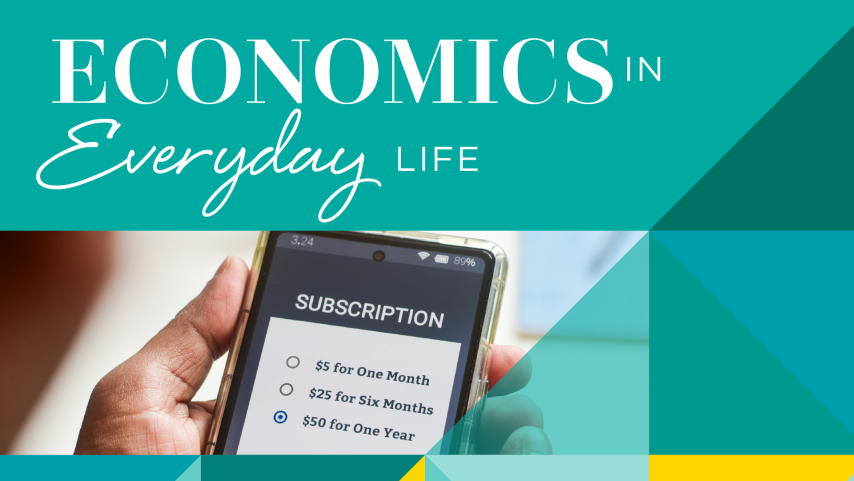
The Subscription Drift: How small monthly subscriptions add up, and why “free trials” win
By Nkenge Lawrence
What do Netflix, Disney+, Amazon Prime, Adobe, and that app you downloaded for a free trial three months ago all have in common? They may be quietly taking money from your account every month. If you have used any of these services or the countless others that exist for your pleasure or convenience, then you know that a subscription is the recurring fee you pay at regular intervals, generally monthly or annually, to access a desired service or product. The concept is not new. Subscription models go back centuries, with early examples including books, newspapers, and insurance. But, the rise of digital content in the 2000s introduced consumers to subscription-based movies and music, and by the 2010s, the industry boomed as users could access food, apparel, personal care items, and a broader range of entertainment subscriptions.
Today, the thriving trillion-dollar industry plays a diverse role in driving the global economy, with a staggering uptick of 435 percent over the last decade according to a report by the Subscription Economy Index (2021); and we all have a part to play. Another study by Subscription Service Statistics and Costs (2024), found that the average US consumer spends USD$133 per month, which totals just about USD$1,600 per year on subscriptions. Unsurprisingly, Marketing Charts (2020) reported that eight in every 10 adults use subscription services; that’s 80 percent of us, and I can admit that I see the appeal. Subscriptions provide streamlined, easy, and convenient ways to access a variety of products and services, breaking down barriers to consumption in a world where almost everything is available at the click of a button. This phenomenon may seem harmless and valuable, but every monthly subscription leaks money from our pockets that may be better utilised.
Take a moment to consider how much of your hard-earned dollars go toward subscription costs every month. A US$12.99 subscription may not feel like much. But this expense shows up on your local credit card statement in Barbados dollars, so once you add the foreign exchange fee, your total cost is easily close to $27 a month. Keep five subscriptions like that, and you are spending more than BDS$1,600 a year. So, ask yourself: how many subscriptions do you have? Do you use them and do you need them? Are they billed in Barbados or US dollars, and are these monthly or annual commitments? If the answers give you pause, then it may be time to clean up your subscriptions. Sort through the list by category; if you are subscribed to multiple platforms that provide similar services, that’s a good place to start trimming.
A notable feature of this model is the free trial; subscriptions would be a lot less successful without it. I must confess that I have fallen prey to this clever trap a few times. The free trial gives a consumer access to a subscription for a limited period, usually up to a week, and then starts charging after that period passes. The genius in this design is that in order to access the free trial, you must enter your credit card information, which means that if you forget to cancel before the trial period ends, the service provider already has everything it needs to start taking payments from you. Imagine being charged an annual subscription fee of USD$200 for an experiment you had no intentions of truly committing to. A momentary lapse can cost you an unbudgeted sum. The model is reliant on blunders like these, so we must be vigilant against such tricks.
Our grandparents used to say that a dollar saved is a dollar earned; wise words to live by. Imagine that your household spends approximately BDS$1,600 annually on an assortment of subscriptions. You may gain some benefits from the subscriptions you actually use, but you will never see a cent from that $1,600 again; it has been added to the revenue of a billion-dollar corporation. Now, envision a simple, hypothetical scenario: investing that same $1,600 in an interest-bearing account, a mutual fund, a BOSS+ bond, or the stock exchange, where interest earned is four percent per annum. Using simple interest for illustration, you would earn $64 in the first year, or $320 over five years. You not only keep the $1,600 but you also multiply it. Over time, if you increase your investment, widen your portfolio, or find higher yielding ventures, your money will continue to grow. Perhaps having zero subscriptions is unrealistic and overly ambitious; after all, there are some useful and educational applications that can serve you well. So, before you unsubscribe from everything, revisit the questions I asked earlier and run some numbers based on your subscriptions. Then, trim away the unnecessary services, cancel that free trial before it is too late, and look for ways to invest the savings, or perhaps pay down debt.
We are living in a truly remarkable age, with unlimited access to goods and services and impressive technological advancements. The world is now quite literally at our fingertips, but we cannot get carried away; the basic economic problem still exists: scarce resources amidst unlimited wants. We must be responsible with our finances as we consume. So, the next time a free trial invites you to click, pause. Ask whether the service will truly add value, whether you can afford the recurring cost, and whether the money could be better utilised to serve you.
References
Chen, Yue (2023). “The Subscription Economy: Implications for Valuation and Earnings Management.”
Marketing Charts. (2020). “8 in 10 Adults Report Paying for At Least One Subscription Service.”
C+R Research. (2024). “Subscription Service Statistics and Costs.”
Cobzaru, Paula, and Alexandru Tugui. (2023). “The Subscription Economy and Its Contribution to the Global Economy.” Management Studies, 12(3), 137-145.
UBS. (2023). “The Rise of Subscription Economy: A Win-Win for Consumers and Businesses.”
Zuora. (2021). “Subscription Economy Index.