Edge
Use the latest browser recommended by Microsoft
Get speed, security and privacy with Microsoft Edge

Navigation

Contact Us

Email:
hrinfo@centralbank.org.bb - Human Resources Matters
hrapplications@centralbank.org.bb - Applications for Employment
More
Fax:
(246) 427-4074 - Accounts
(246) 437-3334 - Banking
(246) 436-7836 - Governor’s Office
More
Address:
Tom Adams Financial Centre
Spry Street
Bridgetown
Barbados

What Are Instant Payments?

In today’s “now” world, we’ve become accustomed to being able to access what we want when we want it. That includes our money. Gone are the days when we were content to wait days for a cheque to clear or for the funds a family member, friend, or client sent electronically to reach our account. This desire to have immediate access to our money has given rise to instant payment systems, which enable real-time money transfers between parties. 

But what exactly are instant payments, and how do they work?

Understanding Instant Payments

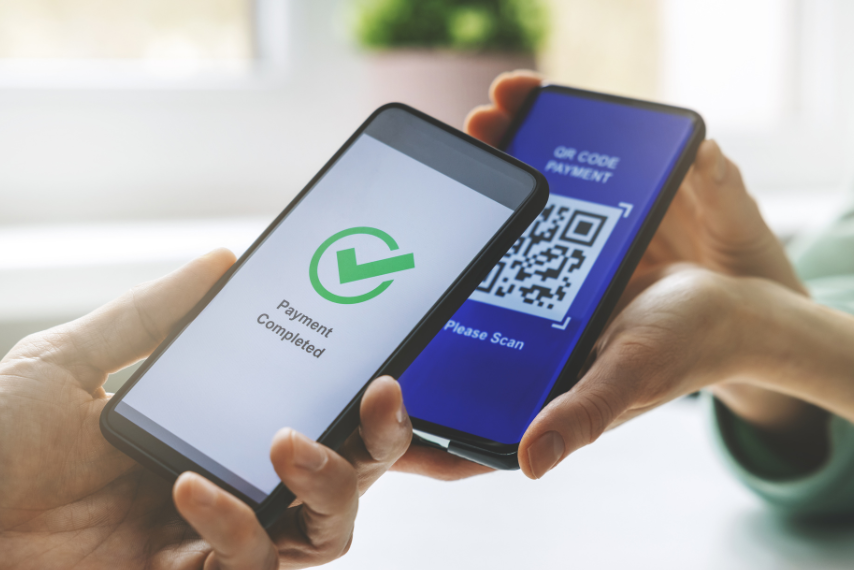
Instant payments are digital transactions where money is transferred and settled immediately between the sender and recipient. These payments are processed in real time, providing the beneficiary with immediate access to their funds, which is a significant improvement over conventional banking systems, which often take hours or even days to process due to batch processing or the limitations of regular operating hours.

Instant payments work through real-time payment networks, employing modern infrastructure such as cloud computing, APIs (application programming interface - a software intermediary that allows two applications to talk to each other), and secure authentication methods to facilitate transactions. 

Key Features of Instant Payment Systems

There are six key characteristics that are common in instant payments:

  1. 24/7 365 Availability – Unlike traditional bank transfers, instant payments function around-the-clock, including weekends and holidays.
  2. Real-Time Processing – Transactions are completed within seconds, rather than hours or even days.
  3. Security and Fraud Protection – Instant payment systems are designed with advanced security measures such as encryption, multifactor authentication, and fraud detection. Encryption securely transmits your information, rendering it indecipherable should an unauthorised person gain access to it, while multifactor authentication requires you to confirm your identity using more than one method (e.g. a password and biometrics), which protects you on the user end. The built-in fraud detection system quickly flags and prevents suspicious activities, offering another layer of protection. You also receive a notification as soon as you send or receive a payment, so you are always aware of transactions involving your account.
  4. Proxy Identifiers – Instead of you having to request or provide account details, instant payment systems allow you to complete transactions using proxy identifiers or “aliases.” These can include email addresses, mobile phone numbers, or even QR codes. This not only simplifies the process, it also removes the need for you to share sensitive banking information.
  5. Interoperability – Instant payment systems integrate with banks’ platforms, digital wallets, and financial apps, which allows you to make transactions with people and businesses who bank with different financial institutions or use different e-money services.
  6. Irrevocability  – Once a payment is executed, it cannot be reversed, which provides certainty to the recipient. For example, business owners can be confident that the payment they receive for a product or services they’ve rendered cannot be cancelled after the fact. It also means, however, that you need to be careful when sending money to someone. For this reason, the system will prompt you to recheck the information you have entered before you hit send. Being able to use an email address or phone number rather than having to type in complex banking detail will undoubtedly reduce the likelihood of entering incorrect information, and the system also carries out checks to confirm that the recipient’s details are accurate.

Benefits of Instant Payments

It’s obvious, then, that instant payment systems offer several advantages. They facilitate several different types of transactions, including between individuals, individuals and businesses, businesses and other businesses, businesses and Government, and Governments and individuals. That means you could buy groceries, pay your bills, receive a tax refund, and even send money to a friend and family member here in Barbados. And because transactions can be completed using aliases, there’s no need for you to remember complex account details or share sensitive banking information.

For businesses, the instantaneous nature of these payments reduces the cash flow challenges they might experience while waiting on a wire transfer or for a cheque to clear.

Why the Central Bank of Barbados is Developing an Instant Payments System

Instant payments are transforming the financial landscape, making transactions faster, even more safe, and more accessible. But for all Barbadians to be able to benefit, the system has to be open and available to everyone. Having a national instant payments system will mean that the user making the payment and the one receiving it don’t have to bank with the same institution or even any institution at all. This opens the door to greater financial inclusion for our people.

Have a question about BiMPay? Pose it here.