
Use the latest browser recommended by Microsoft
Get speed, security and privacy with Microsoft Edge


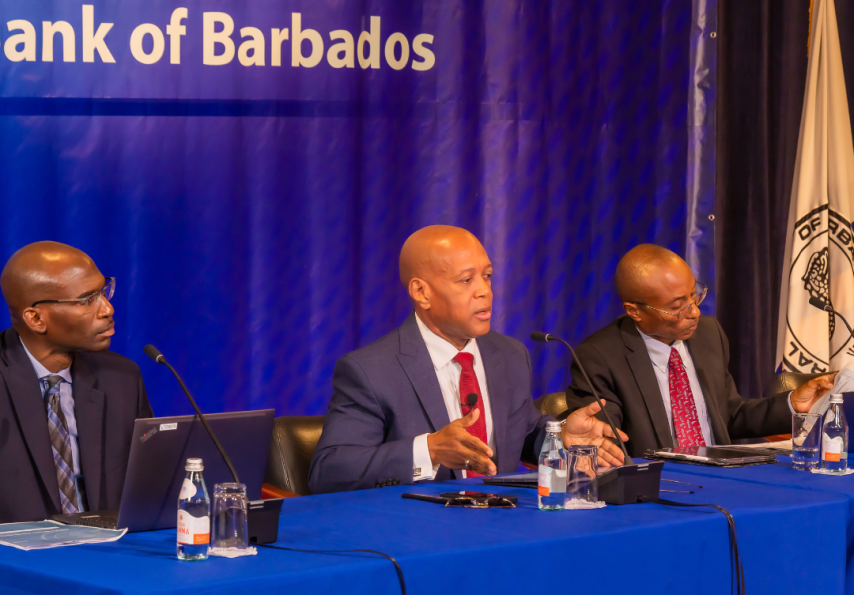
Stable economic growth and contained inflation prevailed during the first quarter of 2026, even as global geopolitical tensions intensified. Real GDP expanded by an estimated 1.7 percent, supported by sustained activity in tourism, business and other services, and construction. The unemployment rate stood at 7.2 percent at end-December 2025, while jobless claims fell during the first three months of 2026, signalling continued labour market resilience. The 12-month moving average inflation rate edged up modestly to 1.1 percent at end-February 2026, 0.2 percentage points higher than a year earlier, reflecting higher prices for restaurant services. Point-to-point inflation rose to 1.3 percent in February 2026 from a decline of 0.3 percent in February 2025, driven by stronger demand for restaurant dining, recreation and culture, education, transport, and healthcare services.
Barbados sustained robust external buffers through the quarter. International reserves stood at $3 billion at end-March 2026, equivalent to 25.5 weeks of import cover, well above the 12-week international benchmark. Higher travel credits and a narrower merchandise trade deficit cushioned the reserve position, while lower foreign direct investment inflows and reduced multilateral disbursements following the conclusion of the IMF-supported BERT 2022 programme accounted for the modest $33.4 million decline over the quarter.
Government delivered a strong primary surplus while sustaining record capital investment in FY2025/26. Stronger domestic activity and personal income gains supported a $126.3 million increase in tax revenues, led by higher VAT and personal income tax collections. At the same time, total expenditure rose by $23 million, reflecting elevated spending on capital projects and current transfers to state-owned enterprises. The primary surplus reached $647.3 million, equal to 4 percent of GDP, while the overall deficit narrowed to $58.3 million, or 0.4 percent of GDP. Economic expansion and the primary surplus reduced the debt-to-GDP ratio by 2.7 percentage points to 94.6 percent at end-FY2025/26.
Financial system conditions remained sound, with improving asset quality, ample liquidity, and capital buffers well above regulatory requirements. During the first quarter, credit and deposits expanded by 0.8 percent and 1.4 percent, respectively, providing additional support for economic activity. Loan quality strengthened further, supported by a decline in non-performing loans, while liquidity remained elevated. Deposit-taking institutions also continued to maintain capital levels well above the regulatory requirement.