
Use the latest browser recommended by Microsoft
Get speed, security and privacy with Microsoft Edge


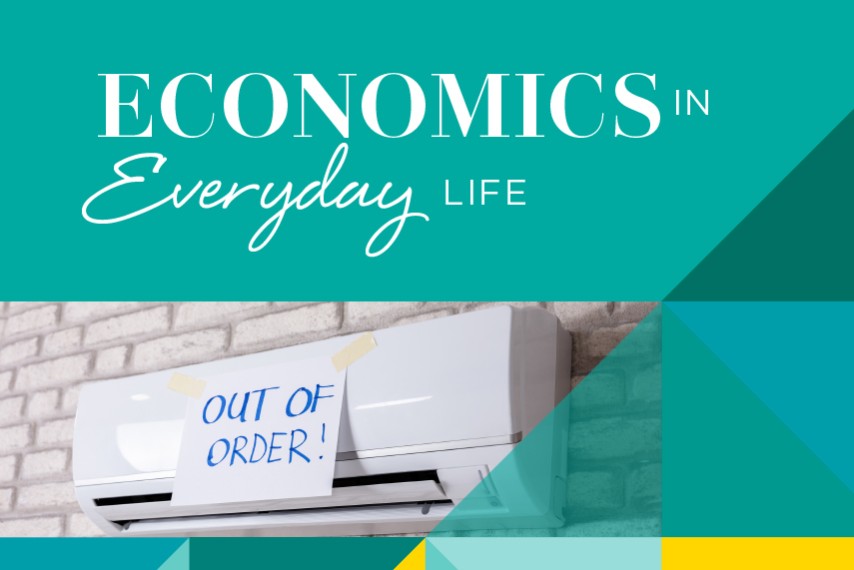
Sometimes the biggest productivity problems don’t come from poor effort or bad attitudes. They come from things we’ve learned to tolerate. A broken air conditioner is one of them.
Most of us have lived with one longer than we should have. We tell ourselves it still works “a little.” The room is warm, but manageable. The repair quote feels high, so we put it off. We adjust. We endure. And then we move on. What we rarely stop to calculate is how much that decision is already costing us.
In Barbados, air conditioning isn’t a luxury. It’s part of how we function. Offices, shops, clinics, classrooms, banks, and homes all rely on it to make work possible in a tropical climate. When an air conditioner stops working properly, productivity doesn’t collapse overnight. It erodes quietly. People get tired faster. Concentration drops. Tempers shorten. Tasks take longer. Mistakes creep in. Meetings feel heavier than they should. You still get through the day, but everything feels harder than it needs to be. Because the decline is gradual, it’s easy to ignore. We adapt. And once we adapt, the cost becomes invisible.
Here’s where the economics comes in. Delaying a repair often feels like saving money. A service call might cost a few hundred dollars. A replacement might cost several thousand. So, we postpone. We wait. We hope it lasts a little longer. But while we’re waiting, something else is happening. If a single employee loses just 10 to 15 percent of their effectiveness because of heat and discomfort, that loss repeats every day. Multiply that across weeks or months, and the hidden cost can easily exceed the repair bill.
In other words, the money you think you saved shows up later, as slower work, more mistakes, more stress, and lower output. This is what economists call a false economy: saving on the visible expense while ignoring the larger, invisible cost.
This isn’t only about white-collar workplaces. Think about:
In each case, productivity depends on conditions. When conditions decline, output follows, even if effort stays the same. No one works at their best when they’re physically uncomfortable.
The broken air conditioner is just one example of a broader habit. We delay maintenance because it feels optional. We treat it as a cost rather than an investment. We prioritise visible expenses over invisible losses. Cars go longer between services. Equipment runs past its prime. Systems get patched instead of fixed. Eventually, something fails properly, and the repair becomes unavoidable, and more expensive than it would have been earlier. At the household level, this strains budgets. At the business level, it slows operations. At the national level, it quietly drags down productivity.
Barbados depends heavily on services. Services depend on people. And people depend on working conditions. When businesses operate with worn-out equipment, deferred maintenance, and uncomfortable environments, the country pays for it in slower service, lower output, and reduced competitiveness. Productivity isn’t just about working harder. It’s about removing the small, persistent frictions that make work harder than it needs to be. A broken air conditioner is one of those frictions.
This isn’t an argument for replacing everything at the first sign of trouble. It’s an argument for recognising trade-offs.
Before delaying a repair, it’s worth asking:
Sometimes the “expensive” option is actually the cheaper one.
Productivity doesn’t disappear in dramatic moments. It leaks away through small decisions we normalise. Living with a broken air conditioner may feel like coping. Economically, it’s often a quiet loss. Fixing what’s broken isn’t just about comfort. It’s about protecting the value of time, effort, and output, whether in a home, a business, or an entire economy.